
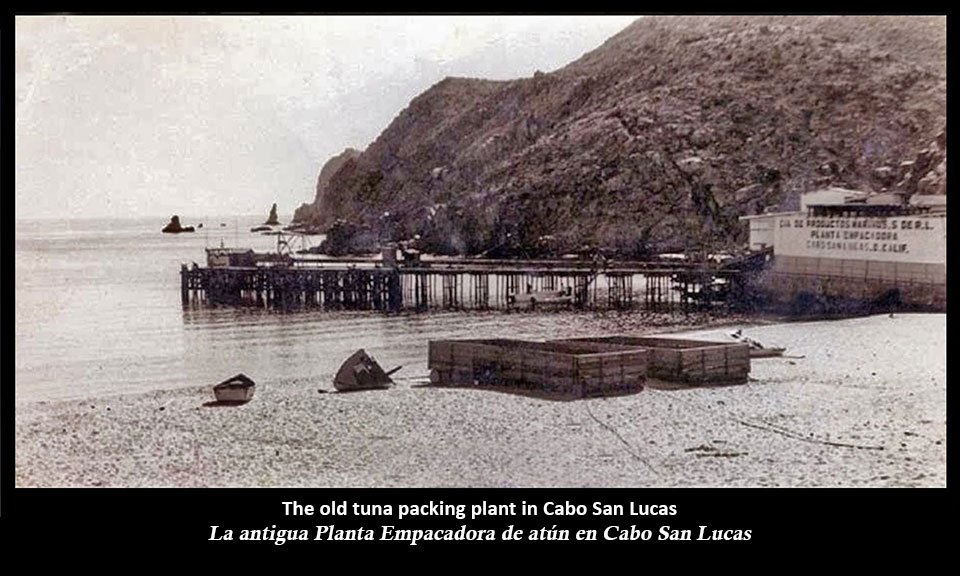
Today Cabo San Lucas means beaches, yachts and luxury resorts, but for much of the 20th century it was a small fishing village built around a single industry: tuna. This is the story of the cannery that gave the port its life.
A factory ship by the Arch
According to the Los Cabos tourism office, in 1925 the Compañía de Productos Marinos set up Cabo San Lucas’ first cannery aboard the factory ship Calmex, processing yellowfin tuna, jack mackerel and skipjack for export to the United States. The ship stayed anchored near the Arch, supplied by a fleet of small boats.
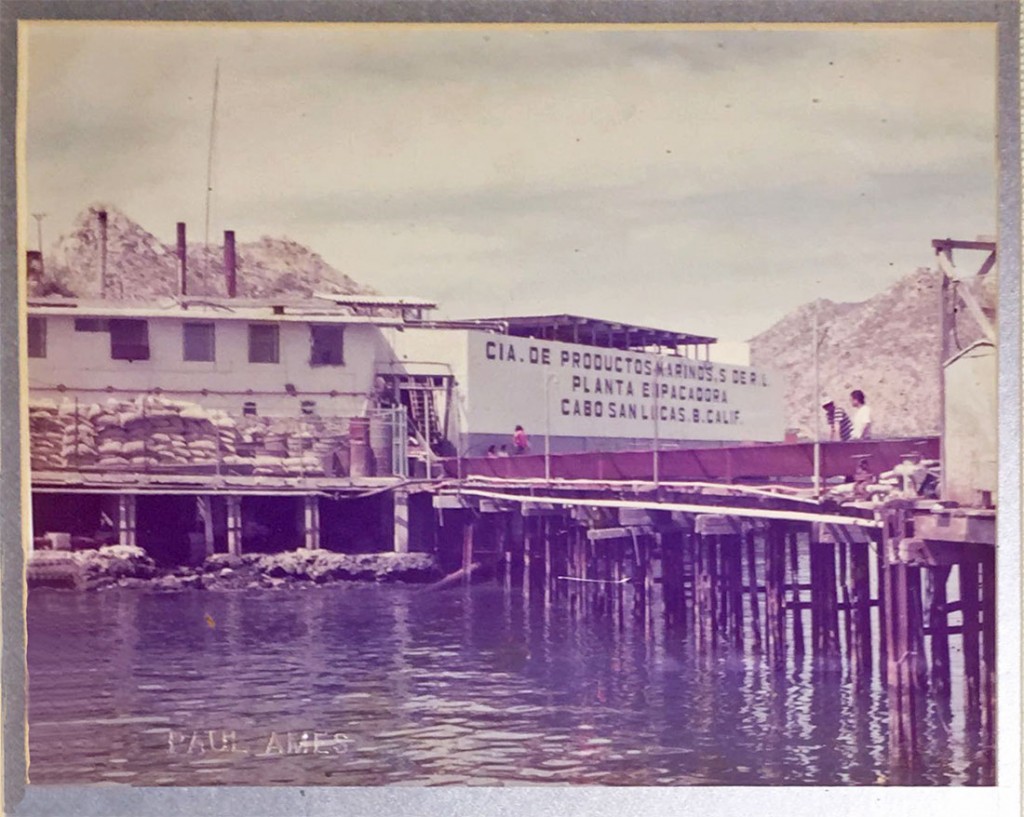
The 1927 land-based plant
In 1927 the cannery was built on land, next to what is now the marina entrance. For decades it was the heart of town: almost all of Cabo San Lucas was cannery workers and their families. At its peak it was considered the largest seafood cannery in Latin America.
When writer John Steinbeck stopped here in 1940, he described a small town barely recovering from a storm, with the cannery at the center of everything.
Closure and the birth of tourism
With sport fishermen and the first hotels arriving in the 1950s and 60s, the economy began to change. In the late 1970s the plant shut down, just as Cabo San Lucas was turning into a tourist destination. Several of the town’s hotel pioneers had worked at the cannery.
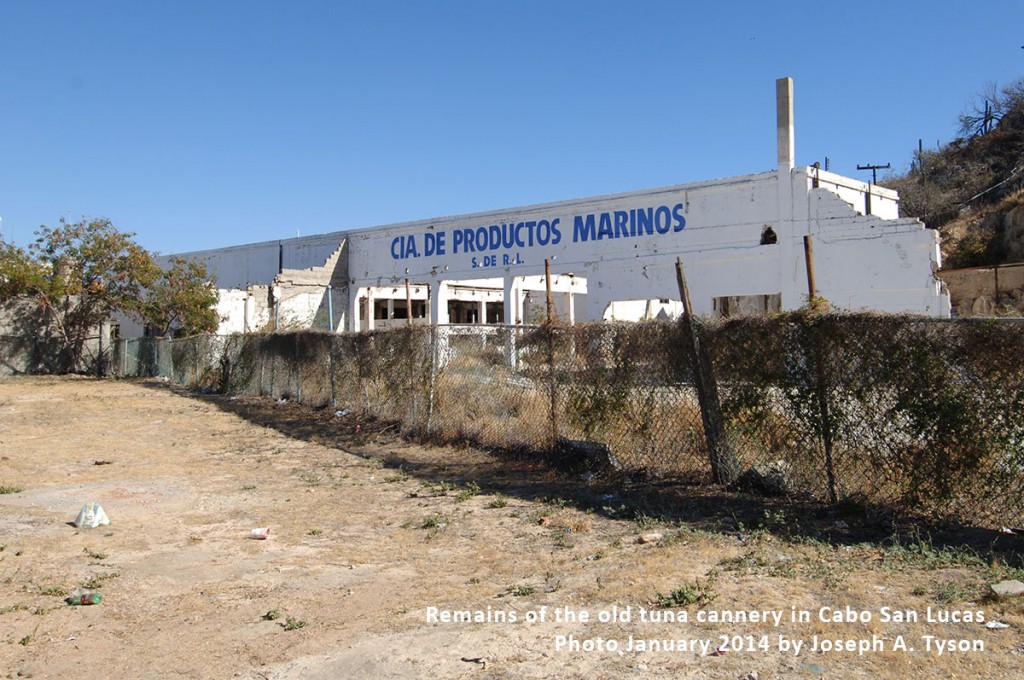
Where to see what’s left of the cannery
At the marina entrance you can still see remains of the old building and pier. The best view is from the water: on an Arch boat tour or the pirate ship sunset cruise you sail right past it while the captain shares the port’s history.
Want more? Read the full history of Cabo San Lucas or discover the Bisbee’s Black & Blue, the fishing legacy that lives on today.
FAQ
When was the Cabo San Lucas tuna cannery founded?
The first cannery operated in 1925 aboard the factory ship Calmex, and the land-based plant was built in 1927.
What did the cannery process?
Mainly yellowfin tuna, jack mackerel and skipjack, exported mostly to the United States.
Does the cannery still exist?
It has been closed since the late 1970s, but remains of the building can be seen at the entrance to Cabo San Lucas marina.
Sources: Old Cabo; Vamonosalbable (2009); Wilkes, M. F., “El San Lucas que yo conocí”; Los Cabos Tourism Office.